Summer Sloe Gin Sipper
The Sloe Gin & Bitter Lemon is a simple long drink built around two ingredients that complement each other remarkably well.
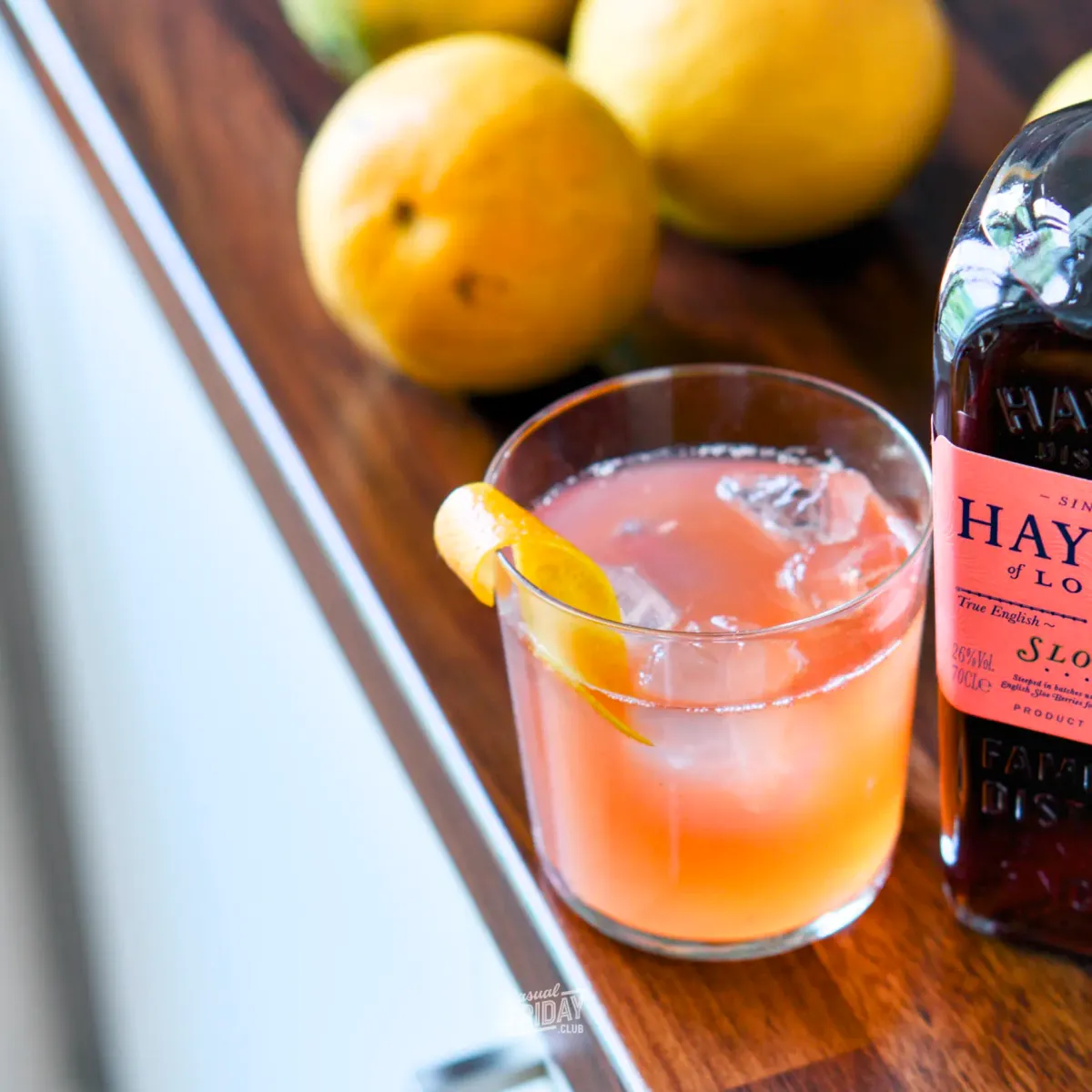
Sloe gin provides rich berry and stone fruit flavours, while bitter lemon contributes citrus freshness and quinine bitterness. Together they create a drink that feels both refreshing and complex despite its simplicity. So, should you have a bottle sitting on a shelf, not knowing what to do with it, you are finally getting the dust off of it!
Sloe gin & bitter lemon ingredients
- 50 ml sloe gin
- 150 ml bitter lemon
- Ice cubes
Optional garnish
- Lemon wheel
- Fresh blackberry
- Lemon zest
How to make a sloe gin & bitter lemon
- Fill a highball glass with lots of ice.
- Add ca. 25 ml of bitter lemon.
- Add 50 ml sloe gin.
- Top with bitter lemon.
- Stir gently for 1 to 2 turns.
- Garnish with a lemon wheel or lemon zest if desired.
- Serve immediately.
Notes on the sloe gin & bitter lemon
What is sloe gin?
Despite the name, sloe gin is technically a liqueur rather than a gin. However it is allowed to carry the gin name due to a special regulation in laws. It is traditionally made by steeping sloe berries, the fruit of the blackthorn bush, in gin with sugar. The result is a spirit with rich berry flavours, gentle sweetness, and a characteristic ruby-red colour. It is often associated with winter time drinks as it is often prepared after the first frost bites the berries and the get harvested in late autumn.
Why bitter lemon works so well
Bitter lemon combines lemon flavour with quinine, the same bitter compound that gives tonic water its distinctive character. Unlike tonic water, bitter lemon provides more citrus flavour and a softer bitterness, making it an excellent match for the fruit-forward nature of sloe gin. That is the reason it works so much better than tonic, which is often the first reaction to mix with sloe gin as it feels to be the natural choice with the gin in its name.
Balance matters in a sloe gin & bitter lemon
This drink works because sweetness and bitterness naturally counterbalance each other. The sweetness of the sloe gin prevents the bitter lemon from becoming harsh, while the bitterness keeps the drink from becoming overly sweet. As sloe gin contains both the alcohol and the sweetness our drinks balancer tool is not as simple to use. Just try with your products of choice, it is easy to get it right.
Use plenty of ice
Because this is a long drink, temperature plays a significant role. A well-chilled drink feels fresher, crisper, and more balanced. When it gets too warm it might taste too sweet and looses its character.
Sloe gin & bitter lemon variations
- Drier version: use more bitter lemon and less sloe gin, optionally grapefruit bitters
- Fruitier version: add a few fresh blackberries
- Lighter version: add a splash of soda water
Sloe gin & bitter lemon background
Sloe gin has long been associated with Britain, where blackthorn bushes grow widely in hedgerows across the countryside. Traditionally, sloes were harvested after the first frost of autumn before being steeped in gin and sugar to create a homemade liqueur, usually ready to be brought out of the basement right on time for it to be served on Christmas Day.
Bitter lemon emerged much later during the twentieth century, as soft drink producers explored variations on tonic water. Combining the two appears to have been a natural progression, creating a drink that highlights both the fruit character of sloe gin and the refreshing bitterness of quinine.
While it may not enjoy the same fame as a Gin & Tonic or a Negroni, the Sloe Gin & Bitter Lemon remains one of the easiest and most reliable long drinks for anyone who enjoys a balance of fruit and bitterness.
Which sloe gin should I get?
Personally I have three favourites:
- Hayman's Sloe Gin – To me a very classic version
- Rutte Sloe Gin – Used to be limited, now it is more available and a treat as it gets a special distillate of sloe berries as well
- Burgen Sloe Gin – A less sweet but stronger ABV German alternative